How to Choose a Performance Marketing Agency for Fashion Brands in India
Introduction
The Indian fashion market is unforgiving. Ad costs keep rising, feeds are crowded with competitors, and apparel margins are razor-thin.
Most fashion brands burn budgets on wrong strategies, scale too early, or hire agencies that don’t understand fashion economics. A bad agency costs you time, unsold inventory, and momentum.
This guide shows you how to evaluate and choose a performance marketing partner that drives profitable growth, not just impressive proposals.
Understand Your Brand Stage Before Hiring an Agency
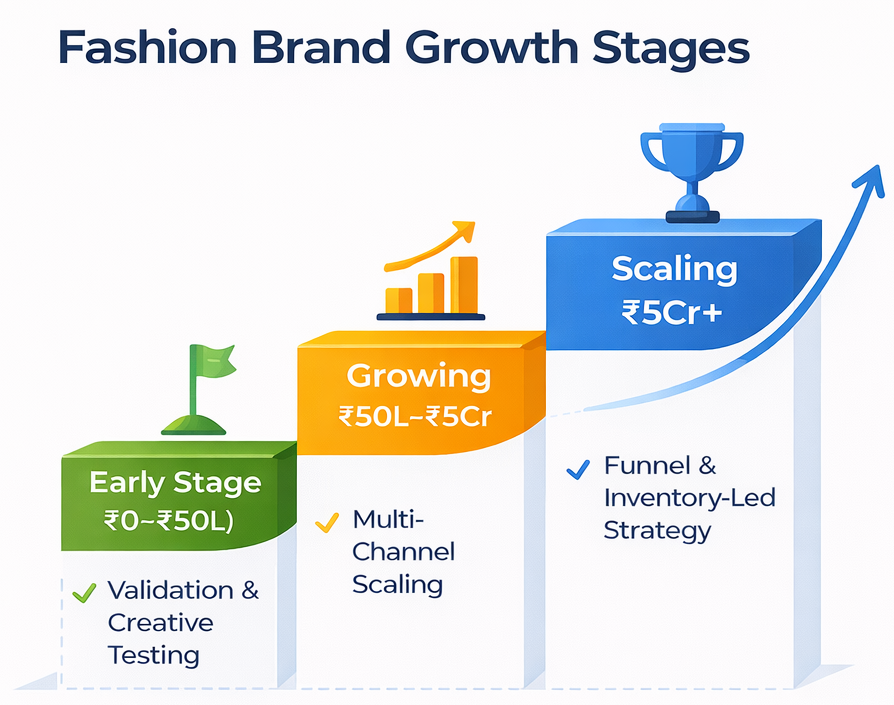
Your revenue stage determines what kind of agency will help you grow.
Early-stage D2C brands (₹0–₹50L): Need foundational work, audience validation, creative testing, conversion optimization. Avoid big-name agencies that overcharge for basics.
Growing brands (₹50L–₹5Cr): You’ve proven product-market fit. Need consistent creative production, multi-channel testing, and disciplined budget allocation.
Scaling brands (₹5Cr+): Need sophisticated funnel management, inventory-based scaling, and strategic partnership across channels.
Hiring a big-name agency too early often fails. They apply scaling playbooks to brands that haven’t validated basics. Match your stage to agency expertise not reputation.
Why Fashion Brands Need Performance Specialists
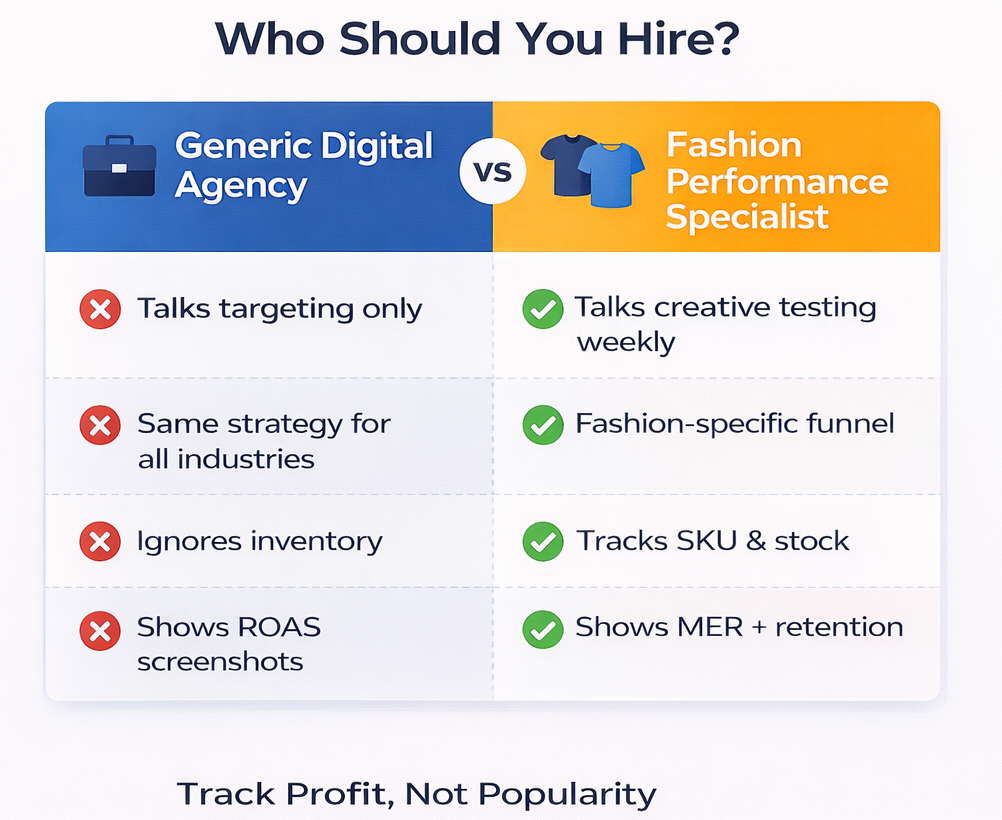 Fashion marketing isn’t like other industries. Generic agencies don’t get it.
What makes fashion different:
- Creative testing must happen weekly, ads fatigue quickly
- Stock and SKU management impacts scaling directly
- ROAS vs MER understand true profitability, not just ad performance
- Low AOV requires different funnel strategies
Signs an agency doesn’t understand fashion:
- Only talks targeting, never creative refresh
- Uses same strategy for every industry
- Doesn’t ask about inventory or margins
- No fashion clients in case studies
Red flags:
- Guaranteed ROAS promises
- No creative testing framework
- Generic proposals without fashion-specific strategy
Questions Every Fashion Brand Should Ask Before Hiring
 Ask hard questions to separate performers from talkers.
“Have you scaled Indian fashion brands before?” Get specifics: brand names, revenue scale, challenges. Vague answers are red flags.
“How do you test creatives weekly?” They should explain the production process and testing framework clearly.
“How do you handle low AOV products?” Fashion often has ₹500-₹2,000 AOV. Need strategies for lower-ticket items.
“How do you report real performance?” If they focus on likes instead of CPA, ROAS, MER not performance-focused.
“What happens when ads stop working?” Every campaign fatigues. How quickly do they respond?
One brand discovered their agency never tested new creatives for three months just increased budgets on fatiguing ads. CPA tripled.
How to Evaluate Case Studies (Without Getting Fooled)
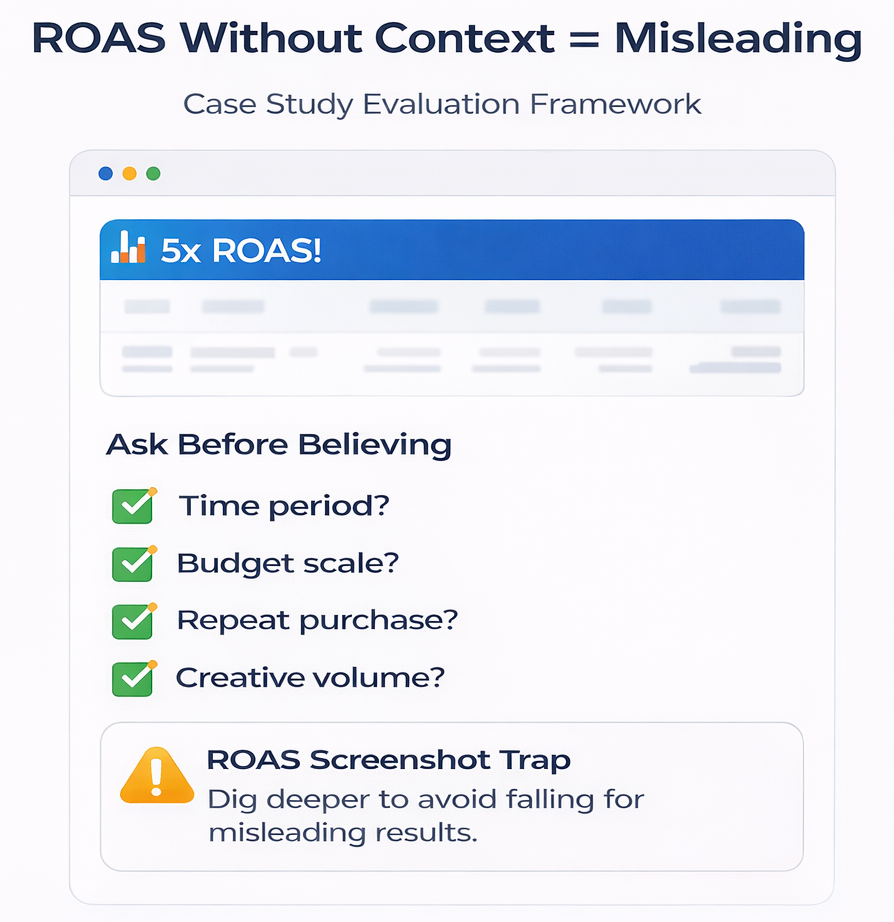
A “5x ROAS” screenshot means nothing without context.
Why ROAS alone is meaningless:
- What time period? One week or six months?
- What budget scale? ₹10,000 or ₹10 lakhs?
- Repeat purchases? High ROAS with zero retention isn’t sustainable
- Creative process? 50 variations or one ad?
Legitimate case studies include:
- Brand background and starting position
- Specific problems solved
- Strategy and creative approach
- Results over 3+ months
- Honest challenges faced
What fake case studies hide:
- Actual budget spent
- Customer acquisition cost
- How long results sustained
- Whether brand is still their client
Ask to speak with current fashion clients. Real results come with references.
Team Structure Matters More Than Big Promises
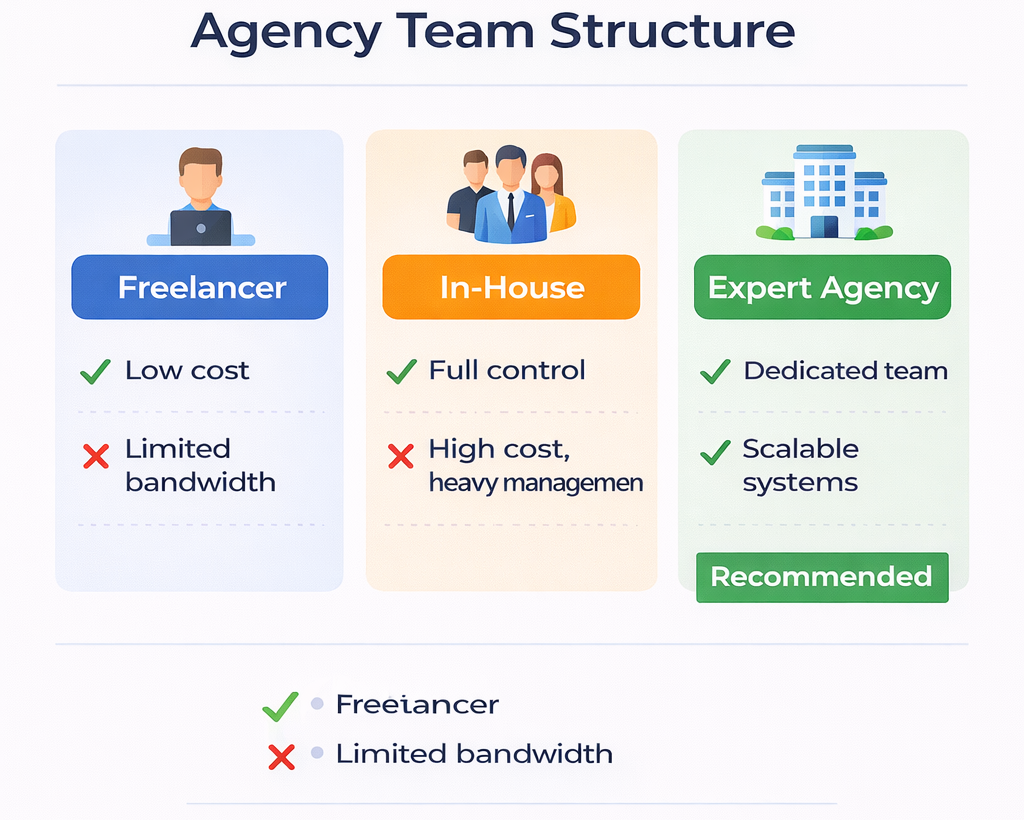 Freelancer-led teams: One person juggling multiple brands. Limited bandwidth, slow testing, inconsistent reporting.
In-house teams: Costs ₹3-5 lakhs monthly for media buyer, designer, analyst. Plus training and management. For brands under ₹5Cr, this kills profitability.
Outsourcing to expert agency: Dedicated team strategist, media buyer, designer, analyst without hiring costs. Experience from multiple fashion brands, established processes, platform expertise. Pay for performance, not salaries.
Who should manage what:
- Ads: Media buyers who understand fashion economics
- Creatives: Designers producing weekly
- Reporting: Analysts tracking real metrics
Weekly calls and quick responses prevent small issues from becoming expensive problems.
Pricing Models That Work (And Ones to Avoid)
Fixed fee: Monthly retainer regardless of results. Predictable but you pay even when performance drops.
Performance-based: Agency earns revenue percentage. Can push volume over profitability and discourage testing.
Hybrid (recommended): Base retainer + performance bonus. Balances stability with aligned incentives.
When each works:
- Fixed: Early testing phase
- Performance-based: Scaling proven products
- Hybrid: Best for most fashion brands
Avoid:
- Low retainers with high revenue cuts
- Unclear deliverables
- Long contracts without performance clauses
Clarify what’s included: creative production, reporting, strategy calls.
Metrics Fashion Brands Should Track With an Agency
 ROAS vs MER:
- ROAS: Revenue from ads ÷ ad spend (campaign performance)
- MER: Total revenue ÷ total marketing spend (true profitability)
MER matters more. High ROAS with low MER means cannibalizing organic sales.
CPA vs AOV: CPA must stay well below AOV. ₹1,500 AOV can’t sustain ₹800 CPA.
Creative fatigue indicators:
- CTR dropping
- CPA rising with same audience size
- Frequency above 3-4
Inventory-led scaling: Scale only in-stock products. Out-of-stock ads kill trust and waste budget.
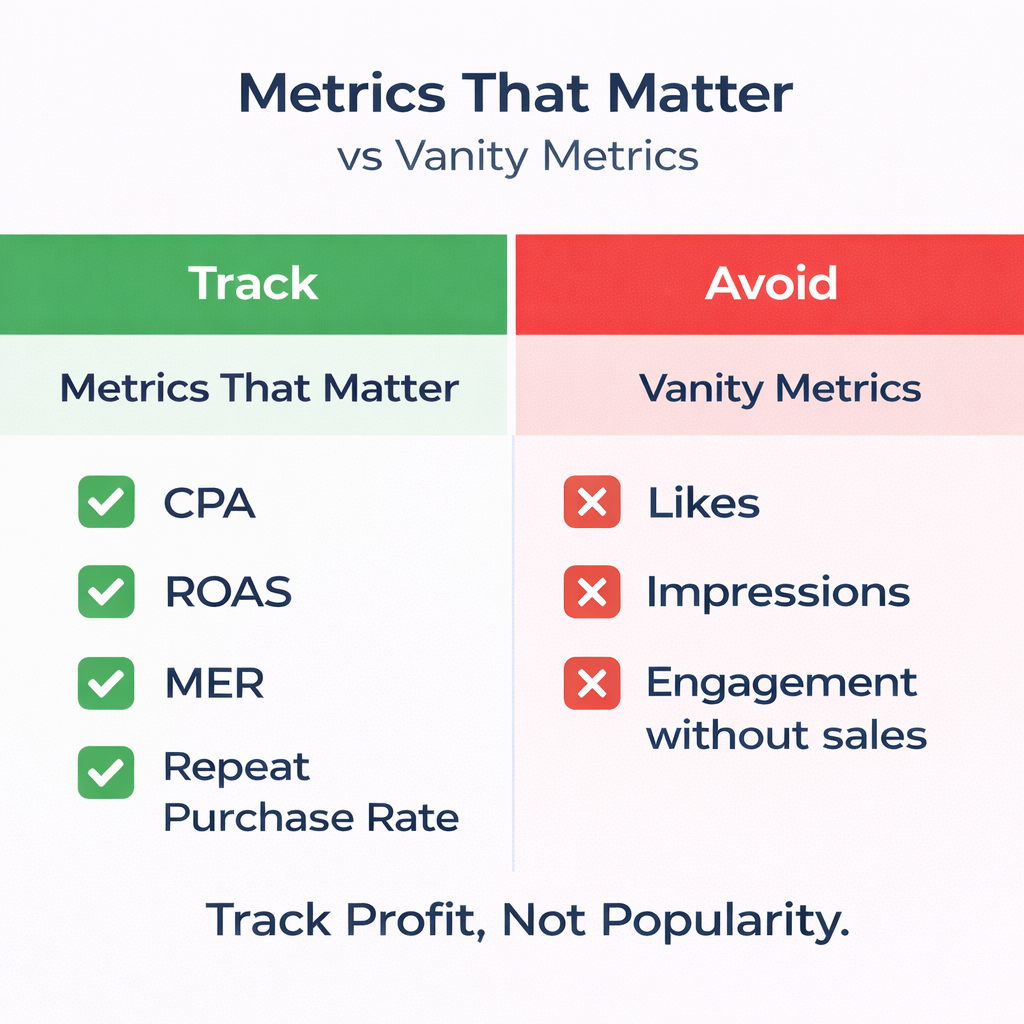
Track: CPA, ROAS, MER, repeat purchase rate, creative refresh frequency
Ignore: Likes, engagement without conversion, impressions alone
Real Case Study: The Pink Moon
Brand: Plus-size clothing offering stylish, well-fitting outfits for Indian women.
Problem:
- Heavily marketplace-dependent
- No owned sales channels
- Needed consistent 5x ROAS
- Required right audience and creatives for plus-size shoppers
Our Strategy:
- Acted as in-house performance marketing team
- Set up Meta and Google campaigns from scratch
- Website optimization consulting
- Audience testing and creative iterations
- Proper tracking and weekly reviews
- Product feed optimization
Results:
- Meta became primary channel with consistent 5x+ ROAS
- Google added steady positive-return sales
- Reduced marketplace dependency
- Improved conversion rates
- Built scalable campaign structure
See detailed campaign structures, audience segments, creative frameworks, and month-by-month ROAS progression with exact strategies used: Read complete case study
How to Spot Long-Term Partners vs Short-Term Agencies
Partners:
- Push back when needed
- Talk about margins, not just ads
- Focus on sustainability
- Communicate proactively
Vendors:
- Just execute requests
- Guard information
- Only care about monthly ROAS
- Focused on retainer
Best agencies feel like co-founders handling your marketing are honest, strategic, invested in your success.
Final Checklist Before Signing
✓ Industry experience: Indian fashion brands, recent case studies, fashion-specific understanding
✓ Clear reporting: Weekly metrics, ROAS vs MER, live dashboards
✓ Creative strategy: Production frequency, in-house design, testing framework
✓ Communication: Weekly calls, response times, dedicated contact
✓ Exit clause: Notice period, data access, termination terms
✓ Deliverables: Monthly fee inclusions, creative count, optimization cycles
Get everything documented. Good agencies welcome clear agreements.
Final Thoughts
Choosing an agency isn’t about the cheapest option or flashiest portfolio. It’s about finding a partner who understands your business, respects margins, and cares about sustainable growth.
The right agency challenges assumptions, stays transparent, and treats your budget like their own.
Fashion brands operate on tight margins in fast-moving markets. You can’t afford months of “learning” with the wrong agency. Use this guide to ask tough questions and choose proven partners.
Choose wisely. Your growth depends on it.
Ready to Find the Right Partner?
We specialize in performance marketing for Indian fashion brands building owned channels, scaling profitably, reducing marketplace dependency.
Contact us for a free consultation